
Nothing in pregnancy books fully prepares a woman for the physical reality of the first week after delivery. The focus shifts entirely to the newborn, while the mother’s body still recovering from the most intense physical event it has ever experienced gets surprisingly little attention from anyone except herself.
Hospital Days 1–2: The Immediate Aftermath
In the first 24–48 hours, lochia postpartum bleeding is at its heaviest. The volume shocks most new mothers. This is not a heavy period; it is the uterus shedding its entire pregnancy lining. Clots the size of a small plum are normal. Bleeding that soaks through a pad in under an hour, however, requires immediate medical attention.
Cramping is constant as the uterus contracts back to its pre-pregnancy size. Breastfeeding intensifies these cramps because nursing releases oxytocin, which triggers uterine contractions. Many new mothers are unprepared for this direct connection between feeding and bleeding.
Homecoming Day 3: Reality Hits
Leaving the hospital is both relieving and terrifying. The bleeding continues usually bright red for the first 4–5 days. Perineal soreness from stitches (for vaginal delivery) or abdominal incision pain (for C-section) makes sitting, standing, and walking uncomfortable. Night sweats begin as hormones shift rapidly, adding another layer of discomfort.
Physical Realities Days 4–7
By day 4, the bleeding typically transitions from bright red to a darker, brownish flow. The volume decreases but does not stop. Many women experience flow surges especially after breastfeeding sessions or after standing up from a rest period. The inconsistency of lochia flow catches mothers off guard because it behaves nothing like a regular menstrual cycle.
Breast engorgement peaks around days 3–5. Swollen, hard, painful breasts are normal as milk production ramps up. Warm compresses before feeding and cold packs after provide meaningful relief.
What Products a New Mother Will Actually Use in Week 1
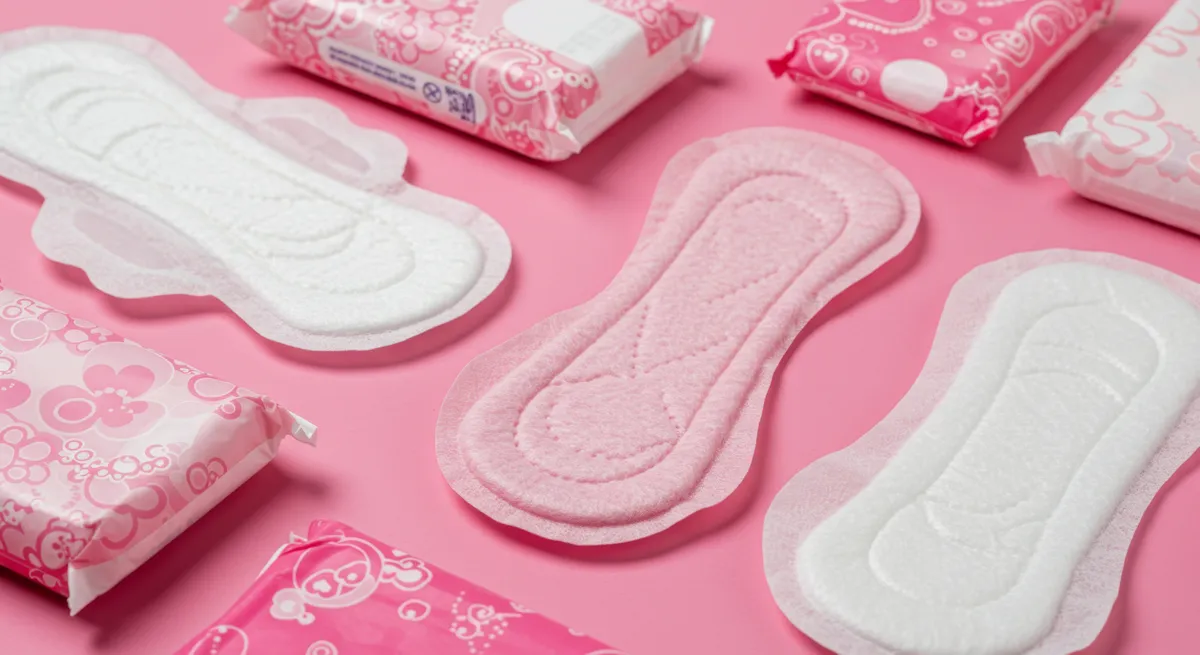
This is where preparation matters most. New mom maternity pads are the single most important product in the first week. Regular sanitary pads cannot cope with lochia volume they are designed for menstrual flow, which is a fraction of postpartum bleeding output.
High-absorbency pads designed for postpartum bleeding are non-negotiable in week 1 regular sanitary pads simply cannot cope. New mom maternity pads offer extended coverage, higher absorbency, and a softer surface that does not irritate healing perineal stitches.
Beyond new mom maternity pads, the essentials list includes perineal spray (witch hazel–based for cooling relief), ice packs shaped for perineal application, loose cotton underwear, a peri bottle for gentle cleaning after bathroom use, and stool softeners prescribed by the doctor.
Stocking new mom maternity pads before the due date eliminates a common postpartum emergency running out during the heaviest bleeding days. A supply of at least 30–40 new mom maternity pads covers the first two weeks comfortably. New mom maternity pads should be kept beside the bed, in the bathroom, and near the nursing chair every location where a change might be needed without delay. Choosing new mom maternity pads with adhesive backing ensures they stay in place during overnight sleep when movement is frequent and half-conscious.
Every hospital bag should include at least 10 new mom maternity pads for the first 48 hours. The hospital may provide basic pads, but they are rarely sufficient for the heavy bleeding that characterises the first two days. Having personal new mom maternity pads ensures consistent comfort and absorbency from the moment delivery is complete.
Conclusion
The first week is survivable but only when the right products are in place before the baby arrives. New mom maternity pads, perineal care supplies, and a support network form the three pillars of postpartum week one. No amount of planning replaces rest, but preparation ensures that rest is actually possible.

